
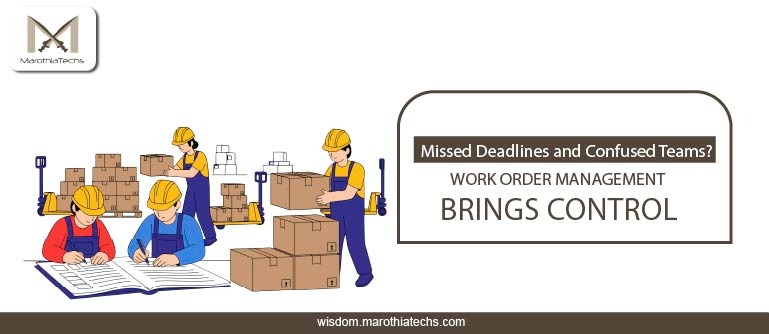
Delays in work orders are a common challenge for growing businesses. Tasks are created, assigned, and followed up across emails, spreadsheets, calls, and messaging apps.
Over time, this scattered approach leads to missed deadlines, confusion among teams, and frustrated customers.
Work order management brings structure to this process. It helps businesses track tasks from request to completion, assign clear responsibility, and monitor progress without relying on manual follow-ups.
This blog explains how work order management works, why it matters, and how it improves daily operations across industries.
What Is Work Order Management?
Work order management is the process of creating, assigning, tracking, and completing tasks in a structured system. A work order typically includes details such as the task description, assigned team member, priority level, deadline, and completion status.
In a digital setup, all work orders are managed through a central system. This removes the need for spreadsheets or paper-based tracking and ensures everyone works from the same information.
Key elements of work order management include:
- Centralised task creation
- Clear ownership and accountability
- Status updates at every stage
- Records for audits and reporting
Common Problems Caused by Poor Work Order Management
Without a structured system, work orders often become difficult to manage. Small issues quickly turn into operational bottlenecks.
Common problems include:
- Work orders getting missed or forgotten
- Teams unclear about task ownership
- Delays due to manual approvals
- Duplicate or repeated work
- Lack of visibility into progress
These issues reduce productivity and make it difficult for managers to plan resources effectively.
Why Work Order Delays Hurt Business Operations
Delayed work orders affect more than just timelines. They create a ripple effect across departments.
Impact on Teams
- Increased follow-ups and internal friction
- Time wasted on status checks
- Lower morale due to unclear expectations
Impact on Customers
- Missed service timelines
- Reduced trust
- Higher complaint rates
Impact on Costs
- Overtime expenses
- Rework due to miscommunication
- Equipment downtime
A clear work order management process helps reduce these risks by improving coordination and accountability.
How Smart Work Order Management Works
A structured system simplifies the entire lifecycle of a work order.
Centralised Work Order Creation
All requests are logged in one place, ensuring nothing is missed.
Real-Time Tracking
Managers and teams can see task status instantly without manual follow-ups.
Clear Task Ownership
Each work order is assigned to a specific person or team.
Automated Alerts
Notifications ensure tasks move forward without delays.
This approach helps teams stay aligned and focused.
Key Features to Look for in a Work Order Management System
Choosing the right system is essential for long-term success.
Important features include:
- Simple work order creation
- Status tracking and progress visibility
- Reporting and performance insights
- Secure data handling
Systems like Wisdom OMS combine work order tracking with broader operational control, making them suitable for growing businesses.
Benefits of Using Digital Work Order Management
Switching from manual tracking to a digital system delivers measurable improvements.
Key benefits include:
- Faster task completion
- Reduced manual errors
- Better coordination between teams
- Improved resource planning
- Clear performance data
These benefits support smoother operations and stronger service delivery
Choosing the Right Work Order Management Solution
The right solution should support growth without adding complexity.
Consider the following:
- Ease of use for all teams
- Scalability as operations expand
- Reliable customer support
- Data security and access control
Bring Control and Clarity to Work Orders
Work order management helps businesses reduce delays, improve coordination, and maintain better control over daily operations. By moving away from manual tracking and adopting a structured system, teams can work more efficiently and deliver better outcomes.
Solutions such as Wisdom OMS provide a central platform where work orders can be created, assigned, tracked, and closed with complete visibility. This allows managers and teams to stay aligned, reduce follow-ups, and ensure tasks are completed on time.
A well-implemented solution supports accountability, improves visibility, and helps organisations scale without operational stress.
Leave a Reply